
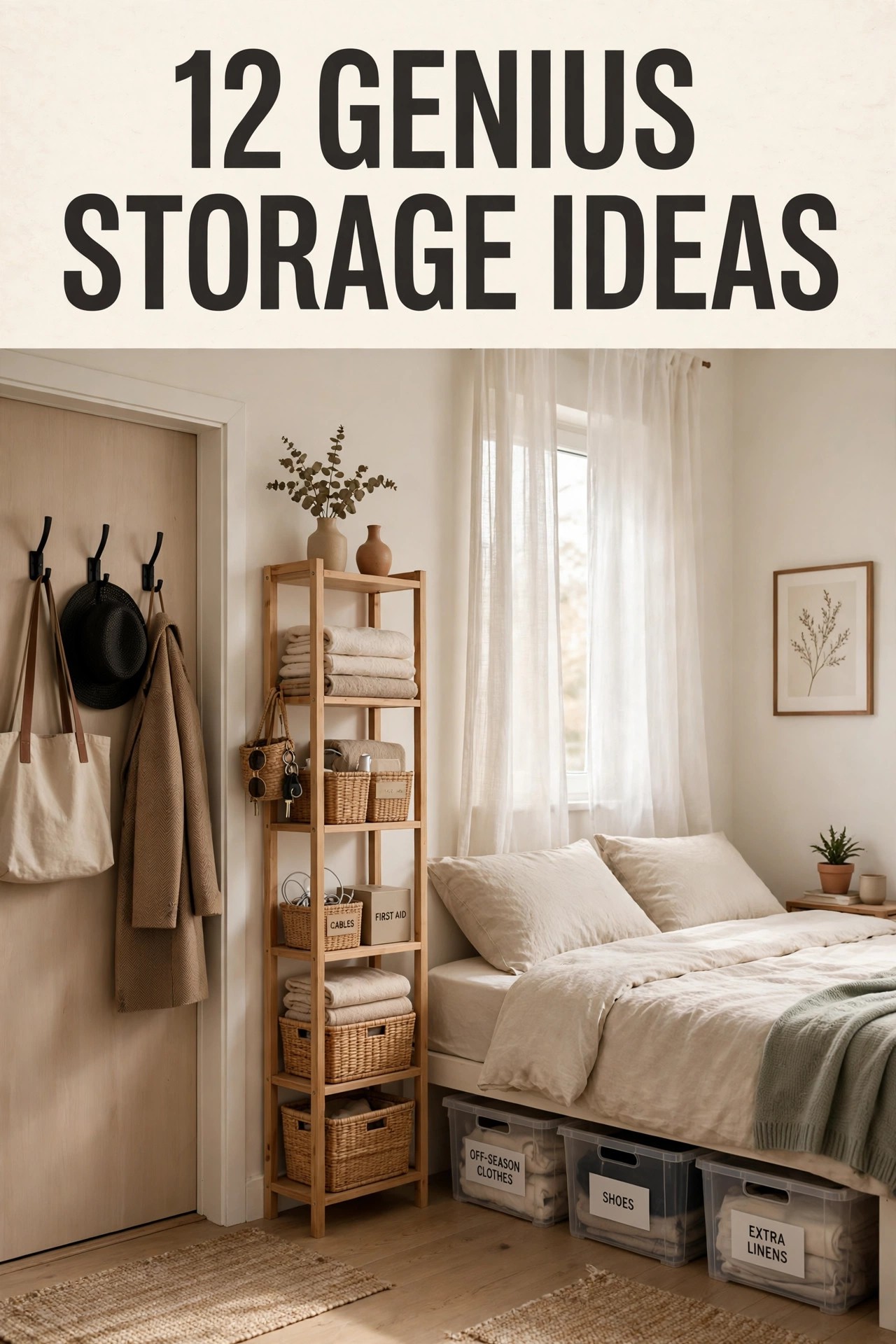
12 Genius Storage Ideas for Apartments With No Closets
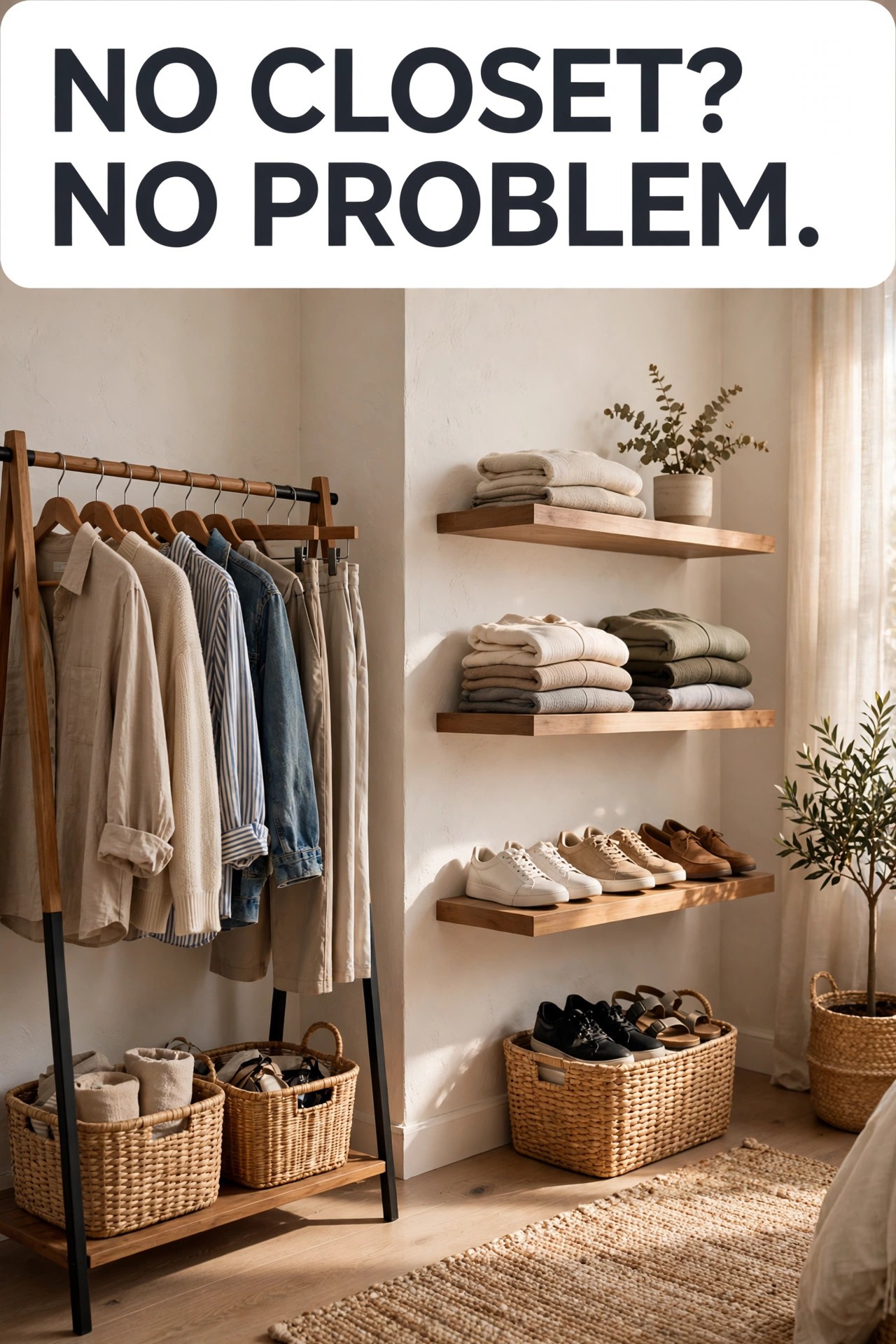
My first apartment in the city had exactly one closet, and it was already taken, by the water heater. So my clothes lived in a suitcase for three months, my shoes lived by the front door in a pile I tripped over daily, and I told myself this was just how small-apartment life worked. It isn’t. It took me one Saturday, about $85, and a hard look at every wall and door I was ignoring to fix it for good.
If your place has zero closet space, or one sad closet shared with a vacuum cleaner and a pile of board games, these 12 ideas actually hold up in real apartments. No built-ins, no landlord fights, nothing you can’t undo on moving day.
1. Get a real garment rack, not a flimsy one
The $15 wire rack from the discount store will bow in the middle by February. Spend a little more, around $30 to $45 for a sturdy steel rack from Amazon Basics or IKEA’s RIGGA, and it becomes your closet. Hang your everyday clothes here and keep the rest (off-season, occasion wear) somewhere else entirely. A rack with a lower shelf doubles as shoe storage, which solves two problems at once. Put it against a wall you already walk past, not in the middle of the room, or it’ll feel like a clothing store exploded in your bedroom.
2. Turn the space under your bed into drawers
A standard bed frame hides roughly 30 square feet of storage. Low, wheeled bins (about $20 for a two-pack at Target or Walmart) slide under and hold a shocking amount: out-of-season sweaters, extra bedding, the jeans you only wear on weekends. Clear bins beat opaque ones here, you can see what’s inside without dragging everything out. If your bed sits too low, a set of bed risers costs under $15 and buys you another 5 to 7 inches of clearance.
3. Hang an organizer on every door you own
Over-the-door hooks and pocket organizers are the highest-return storage in a small apartment, because doors are space you already have and aren’t using. A clear shoe organizer on the bedroom door holds shoes, scarves, belts, chargers, sunscreen, anything small that otherwise ends up in a junk drawer. A row of sturdy hooks on the bathroom door handles towels and tomorrow’s outfit. Total cost: about $12 per door, zero holes in the wall.
4. Run a shelf all the way around the top of a wall
There’s a strip of wall above every door frame and above every wardrobe that most people never look at. A single long floating shelf up there, installed with two brackets, about $25 in materials, holds books, baskets, and the stuff you need twice a year. It’s out of your eyeline, so it doesn’t make the room feel crowded, and it turns dead air into a full shelf of storage. Keep a small step stool nearby or you’ll never use it, and then it’s just decoration.
5. Go tall, not wide, with shelving
Floor space is the one thing you can’t make more of, so stop buying wide furniture. A narrow bookcase, 12 to 16 inches deep, 6 feet tall, fits in the gap beside a door or at the end of a hallway and holds as much as a dresser twice its footprint. Ladder shelves work the same way and look lighter because they’re open. Put the heavy stuff (books, bins) low and the pretty stuff high, or the whole thing tips forward the first time you bump it.

6. Make your bed do double duty
If you’re buying a bed frame anyway, get one with drawers built in, or a lift-up ottoman base. A storage bed costs maybe $80 to $150 more than a plain frame and swallows an entire dresser’s worth of clothes. It’s the single biggest storage upgrade a small bedroom can get, and unlike a rack or shelf, it takes zero floor space you weren’t already using. I kept my winter coats in mine for two years and forgot they existed until November, which is exactly the point.
7. Use the back of the closet door you do have
Even one small closet gets better with a door rack. Hang a wire organizer inside the door for shoes, or a row of hooks for bags and hats. The inside of a door is about 15 square feet of surface most people leave blank. And if your “closet” is really just a curtain rod in an alcove, the same trick works on the wall beside it, a few matching hooks at different heights turn a bare wall into a bag and hat station.
8. Vacuum-seal the off-season stuff
Here’s the math that changed my storage life: a puffy winter coat takes up about four times the space of a T-shirt, and you don’t wear it for six months of the year. Vacuum storage bags (around $15 for a pack of eight) shrink bulky coats, comforters, and sweaters down to flat slabs you can slide under the bed or stack on a high shelf. Don’t vacuum-seal leather, anything with feathers you care about, or your good suit, those need to breathe. Everything else? Seal it and forget it until the weather turns.
9. Give every category a basket, and label it
Storage fails when it’s vague. A basket labeled “winter accessories” gets used. A basket labeled “misc” becomes a junk pit within a week. I use cheap woven baskets from the dollar store (about $5 each) with little clip-on labels, one per category: scarves, chargers, gym stuff, gift wrap. When everything has a named home, putting things away takes five seconds instead of a decision, and that’s the difference between a tidy apartment and a slow slide back into chaos.
10. Add a second hanging rod inside any nook
If you have even a shallow alcove, a recessed wall niche, or a wardrobe frame without doors, a tension rod ($8 to $12, no drilling) hung halfway down doubles your hanging space instantly. Short things, shirts, folded pants on clip hangers, go on the lower rod, long things on the top one. Tension rods also work inside deep kitchen cabinets for cutting boards and baking trays, if you want to take this idea further than the bedroom.
11. Stack matching bins on top of wardrobes and cabinets
The top of a wardrobe is a shelf you’re ignoring. Matching lidded bins up there look intentional instead of messy, and they hold the stuff you need a few times a year: holiday decorations, luggage, the air mattress. Buy the same bin in the same color, mismatched boxes up high read as clutter, matching ones read as a system. Label the short side facing out so you’re not pulling down three bins to find the Halloween lights.
12. Keep a capsule, rotate the rest
This one isn’t furniture, but it’s the idea that makes all the others work. You don’t need access to everything you own every day, you need access to what you’re wearing this month. Keep 20 to 30 pieces in your active rotation (on the rack, in the easy bins) and store the rest sealed and labeled. Swap the rotation when the season changes. It’s a 20-minute job twice a year, and it’s how people in genuinely tiny apartments never look like they’re drowning in clothes.
Where to start this weekend

If I were starting over in that water-heater apartment, I’d buy three things first: a solid garment rack (#1), two under-bed bins (#2), and an over-the-door organizer (#3). That’s under $75, it’s all renter-safe, and it clears the suitcase off the floor and the shoe pile from the doorway in one afternoon. The shelves and the vacuum bags can wait until you see what still doesn’t have a home.
No closet isn’t a storage death sentence. It’s just a nudge to use the walls, the doors, and the space under your bed, the square footage you already pay rent on and never counted.
Save this for your next move, and follow Small Space Bliss for a new small-space idea every day.